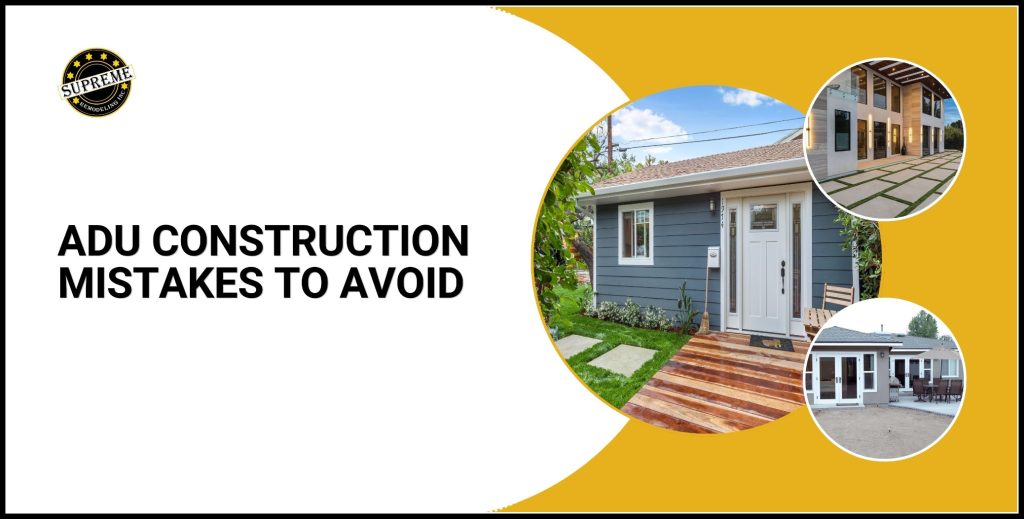
Building an Accessory Dwelling Unit (ADU) sounds exciting, and honestly, it should. You get extra living space, a potential rental income stream, or a private place for a family member. But the reality is that a lot of homeowners jump into ADU construction without fully understanding what is involved, and that is where things start to go sideways. Mistakes in this process are not just annoying. They can be genuinely expensive, delay your project by months, or even force you to tear down completed work. This guide walks you through the most common ADU construction mistakes that new homeowners make so you can avoid them entirely.
Not Researching Local Zoning Laws and Permits First
This is probably the most common and the most painful mistake people make. Every city, county, and neighbourhood has its own rules about ADU zoning regulations. Some areas limit the size of the unit. Others restrict where on the property it can be placed. Some require a certain distance from the property line, and some HOA communities may not allow ADUs at all.
People often start designing or even building before they check local rules. Then they get a stop-work order or find out the structure does not comply with local ADU building codes. Getting the permits squared away before breaking ground is not optional. It is the foundation of the entire project.
Here is what you should confirm before anything else:
- Zoning category of your property and whether ADUs are allowed
- Maximum square footage permitted for your ADU
- Setback requirements showing how far the structure must be from fences, property lines, and the main house
- Utility connection rules for water, sewer, and electricity
- Owner-occupancy requirements, which some jurisdictions still enforce
Skipping a Detailed Budget Plan
One of the fastest ways to run into trouble with ADU construction costs is to go in with a vague budget. Many homeowners hear a rough number from a neighbor or read an average online and assume their project will land around that figure. It rarely does.
The cost of building an ADU depends on a lot of factors, including the type of ADU (attached, detached, or garage conversion); the size; the materials; the labor market in your area; and unexpected issues like soil conditions or existing utility placements. A solid budget needs to include a contingency fund of at least 15 to 20 percent for surprises. Underestimating ADU project costs mid-build is stressful and can stall the whole project.
Beyond the construction itself, factor in:
- Architectural and engineering design fees
- Permit and inspection fees
- Utility hookup and connection costs
- Landscaping and exterior work post-construction
- Furnishing and interior finishing costs if the unit will be rented
Choosing the Wrong Contractor
Not every contractor is experienced with ADU construction projects. Some general contractors are great at kitchen remodels or room additions but have never navigated the specific permitting process, utility connections, or structural requirements that come with building a fully independent living space.
Hiring someone based only on a low bid is a gamble. You want a contractor who has actually built ADUs before, knows what the local inspectors look for, and has a clear process for managing the project timeline. Ask for references specifically from ADU projects, not just general remodeling work. Check their license and insurance. A contractor who skips steps now will cost you far more later when inspections fail or work has to be redone.
Ignoring the Design and Layout Phase
Rushing through the design phase to save money or time is a big ADU design mistake that shows up later. A poorly designed ADU floor plan makes the space feel cramped, limits natural light, or creates awkward flow between rooms. Small spaces especially need smart design to feel livable.
Think carefully about who will use this space. If it is a rental unit, you want it to feel comfortable and functional so tenants stay longer. If it is for a family member, consider accessibility needs. If you might sell the property someday, a well-designed ADU adds much more value than a poorly laid out one. Spending time upfront on a thoughtful ADU design plan saves you from costly changes later.
A few design elements that are frequently overlooked:
- Natural ventilation and window placement for airflow and light
- Separate entrance to maintain privacy from the main house
- Sound insulation between walls and floors
- Storage solutions built into the design from the start
- Energy efficiency covering insulation, window quality, and appliance selection
Underestimating the Timeline
Most homeowners expect their ADU construction timeline to be shorter than it turns out to be. Between the permitting process, contractor scheduling, material lead times, and inspections, even a modest ADU can take 6 to 18 months from start to finish. Some projects in areas with backed-up permit offices have taken even longer.
Planning around an unrealistic timeline creates problems, especially if you are counting on rental income to offset the construction loan or if a family member is waiting to move in. Build your timeline with a buffer built in at each phase. Permits alone can take anywhere from a few weeks to several months, depending on where you live.
Overlooking Utility and Infrastructure Planning
Every ADU needs access to electricity, water, and sewage. What many homeowners do not realize early enough is that connecting a new structure to existing utilities is not always straightforward. Your main house may not have enough electrical capacity to support a second unit without a panel upgrade. Your sewer line may need to be extended or inspected before it can serve the new space.
Discovering these issues late in the ADU building process can blow your budget and your timeline. Have a qualified electrician and plumber assess your existing infrastructure at the start before designs are finalized. Some municipalities also require separate utility meters for the ADU, which adds to the cost but matters for billing if you have a tenant.
Not Thinking About Long-Term Use
People often build ADUs for one specific purpose and never think beyond it. The unit gets designed entirely for a parent moving in, and then five years later that situation changes and the space needs to become a rental. A rigid, single-purpose design makes it hard to adapt.
Building a flexible ADU that works for multiple uses does not cost much more upfront, but it adds significant long-term value. Think about things like a full kitchen versus a kitchenette, closet space, the width of doorways for accessibility, and whether the unit feels like a real home or just a converted room.
Skipping the Final Inspections
Some homeowners get impatient near the end of construction and push to start using the ADU before final inspections are completed and approved. This is a serious mistake. An uninspected ADU is technically unpermitted, which means it could create major problems when you try to sell your home, apply for insurance, or legally rent the unit.
Final inspections are what give your project official, legal status. They protect you. Even if the construction looks fine to the naked eye, inspectors catch things that matter, including improper wiring, ventilation problems, and fire safety gaps. Getting sign-off on your ADU building permit is the finish line, and it is worth crossing properly.
Frequently Asked Questions
What is the most common ADU construction mistake homeowners make?
Starting construction without confirming local zoning laws and obtaining proper permits. This single mistake causes the most costly delays and sometimes requires a complete teardown.
How much should I budget for unexpected costs in an ADU project?
Set aside 15 to 20 percent of your total project budget as a contingency fund. Unexpected utility issues, soil problems, or design changes often arise during construction.
Do I need a contractor with specific ADU experience?
Yes. General builders may lack knowledge of ADU permitting requirements, utility connections, and local inspection standards, which leads to costly errors and failed inspections.
How long does it typically take to build an ADU?
Most ADU projects take 6 to 18 months from planning to completion, depending on permit processing times, contractor availability, and construction complexity.
Can I rent out my ADU without completing the final inspections?
No. Renting an uninspected ADU is legally risky and may void your home insurance. Always obtain final permit sign-off before renting or occupying the unit.
Conclusion
ADU construction is one of the smartest investments you can make as a homeowner, but only when it is done right. Skipping the research, rushing the design, underbudgeting, or hiring the wrong contractor can turn what should be a rewarding project into a costly lesson. The good news is that every single mistake on this list is avoidable with a little preparation and the right team behind you. Whether you are building a detached ADU, converting a garage, or adding an attached suite, taking the time to plan carefully will pay off in a finished space you are genuinely proud of. For homeowners looking for experienced professionals who understand every step of this process, Supreme Remodeling Inc. is ready to help you build it right the first time.