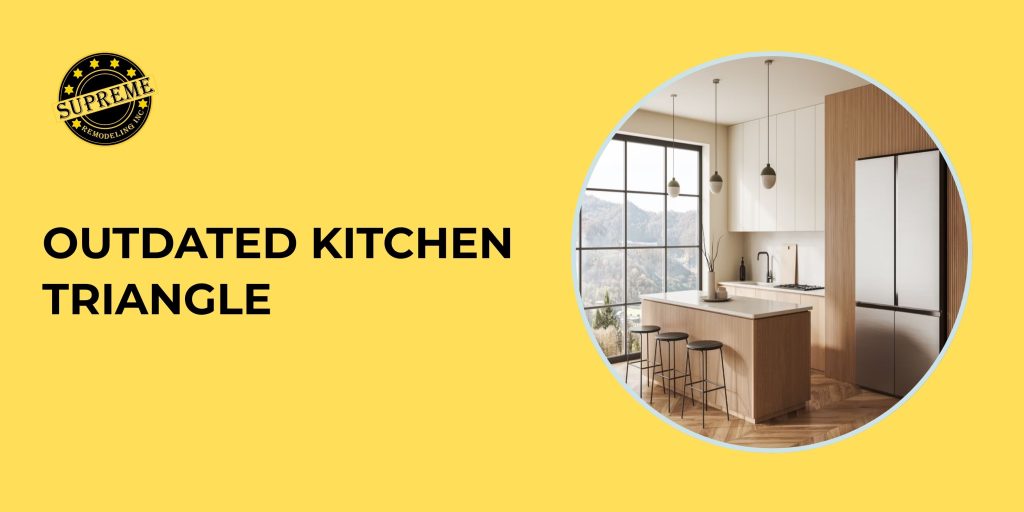
The kitchen work triangle is a term you may have heard before, particularly if you have considered kitchen remodeling. It sounds like a solid principle, and for decades it really was. However, kitchens today are very different from what they were in the early days of the concept. So, the final question is whether the kitchen triangle layout is still relevant for how modern families cook, gather, and live today.
What Is the Kitchen Work Triangle, Anyway?
The kitchen triangle principle involves bringing together three work zones in the kitchen: refrigerator, stove, and sink. The concept was that the cook should be able to walk between these three points without having to walk too far or collide with furniture and appliances. This was intended to be a triangle, with each side being of length 4 to 9 feet and a total perimeter of less than 26 feet.
The idea originated in the early 20th century in the research at the University of Illinois and was specially built to suit a single person, a single cook, working in a small, closed-off kitchen. When you consider how most kitchens are designed and utilized today, that context is quite important. Since that time, so much has happened in the world, and this one rule remained with us for more than almost any other architectural design rule for the houses that we live in.
Why the Triangle Made So Much Sense Back Then
In the mid-20th century, kitchens were small rooms separated from the rest of the house. During meal preparation, usually one person would go back and forth between the fridge, stove, and sink. Maintaining only three spots close together really saved steps and made cooking more efficient in that kind of an environment.
The traditional kitchen work triangle worked because of the simplicity of how people used their kitchens. One cook, not much counter space, and not many large appliances other than the basic ones. It answered a very real need of the way of life for that period and it was so successful that it was used for decades without much thought being given to whether it still suited the lifestyle or not. That’s how a lot of design rules stay around: They are not always correct, but they were correct once, and nobody objected strongly enough.
How Modern Kitchens Have Changed Everything
Today’s kitchens are fundamentally different from what the triangle was designed for. Open floor plans are very popular these days, which means that you may have a living room or dining room right next to your kitchen with no walls in between. Kitchens have generally increased in size, families are cooking together more often, and the range of kitchen equipment has expanded to include much more than a fridge, cooker, or sink.
Consider all the amenities that a contemporary kitchen may have, such as a built-in microwave, dishwasher, double oven, wine fridge, kitchen island with a built-in sink, an air fryer station, and even a dedicated coffee bar. It just doesn’t reflect how people use their kitchens anymore to fit all of that meaningful activity into a single 3-point kitchen workspace. The kitchen triangle design was never meant to account for a secondary sink, let alone an entire island with seating and storage underneath it.
Cooking simultaneously by several different people is likely the No. 1 cause of breakdown in the kitchen work triangle. If you’re cooking with another person, you both have to have your own space, so you don’t keep slamming into each other or getting in each other’s way. A triangle around one cook constitutes a natural bottleneck as soon as someone else joins in to cook. Having children who want to get into cooking comes with this problem, and a hard, triangular table setup makes it worse, not better.
The Problem with Island Kitchens and Open Plans
Kitchen islands have completely reshaped how people interact with their cooking space, and the kitchen triangle rule simply does not know what to do with them. An island often becomes one of the busiest spots in the kitchen, used for everything from chopping vegetables to serving food, doing homework, and gathering with guests during a dinner party. It is a multi-purpose surface that sits right in the middle of where the triangle would normally live.
Open-plan kitchens bring another layer of complexity. When your kitchen is visible from the living room and connected to a dining area, there is a constant flow of people moving through the space even when they are not cooking. Kids walk through to grab snacks, guests wander in to chat, and the family dog finds its way underfoot no matter what. A kitchen layout built around a tight triangle does not account for that kind of everyday traffic, and it can actually make the whole space feel more chaotic rather than more functional.
The Rise of Kitchen Work Zones
Instead of thinking in triangles, many designers today think in kitchen work zones. A work zone is simply a dedicated area built around one specific task or type of activity. You might have a cooking zone cent
ered around the stove and oven, a prep zone near a generous stretch of counter space, a cleaning zone at the main sink and dishwasher, a storage zone for pantry goods and dry ingredients, and a serving zone positioned close to the dining area.
This zone-based kitchen layout is far more flexible because it scales with the size of your kitchen and the number of people regularly using it. It can also be shaped around your personal cooking habits in a way that a triangle never could. If you bake regularly, you might want a dedicated baking zone with easy access to your stand mixer, sheet pans, and dry goods all in one spot. If you host dinners frequently, a separate beverage station with its own mini fridge and glassware keeps guests comfortable and completely out of the main cooking area.
The shift from triangles to zones is not just a passing design trend. It reflects a more realistic look at how people actually behave in their kitchens, which is rarely in a neat, predictable triangle. Real cooking is messier and more layered than that, and your kitchen design should be honest about it.
Does the Kitchen Triangle Ever Still Work?
Honestly, yes, and it is worth being fair about this. In smaller kitchens, the classic kitchen work triangle still has real merit and should not be dismissed entirely. If you have a galley kitchen or a compact L-shaped layout with limited square footage and one primary cook, keeping your sink, stove, and refrigerator within easy reach of each other is still a smart approach. The core principles behind the triangle, minimizing unnecessary walking and keeping the work area free from through traffic, are genuinely good ideas. They are just incomplete when applied to larger or more complex spaces.
The real problem shows up when designers and homeowners treat the triangle as a non-negotiable rule regardless of what the space actually needs. A large open-concept kitchen that serves a busy family of five does not need a triangle at the center of its design. It needs a thoughtful, customized layout built around how that specific household cooks, cleans, entertains, and moves through the space on a regular Tuesday evening.
What Happens When You Ignore Your Actual Habits
One of the most common mistakes people make during a kitchen remodel is designing around what looks good in a floor plan rather than what actually works day to day. A layout might look perfectly balanced on paper and still feel frustrating to cook in because it did not account for where the natural gathering spot ends up being or how the morning coffee routine creates a traffic jam near the back counter.
Your real habits are the best design brief you have. Pay attention to where you naturally drop bags when you walk in from grocery shopping. Notice which counter always ends up cluttered because it sits in the natural path from the door to the stove. Think about how often two people are in the kitchen at the same time and whether the current layout makes that feel easy or awkward. These observations tell you far more about what your kitchen needs than any geometric formula invented decades ago.
What This Means for Your Kitchen Remodel
If you are planning a kitchen redesign, the most useful thing you can do before touching a single cabinet is spend a week simply watching how you use your current space. Those observations are far more valuable than any triangular rule when it comes to making real decisions about your layout. Here are the key things worth paying attention to:
- Where you stand most often: Your natural standing spots reveal where your real work zones already want to be, even if your current layout does not support them properly.
- Where clutter collects: A counter that is always buried in stuff is telling you it sits in a high-traffic path and needs either more space or a smarter purpose in the new layout.
- How many people are cooking at once: If you and your partner keep bumping into each other near the stove, your kitchen needs two separate zones, not one shared triangle.
- How guests and kids move through the space: In open-plan kitchens, people flow through constantly even when they are not cooking, and your modern kitchen layout needs to account for that traffic without letting it disrupt meal prep.
- Your daily routines beyond dinner: Morning coffee, after-school snacks, and weekend cooking sessions all create their own movement patterns, and your kitchen needs to handle all of those moments comfortably, not just the ideal version of a quiet weeknight dinner.
A layout built around how real people behave every day will always outperform one designed around a formula that was invented before dishwashers were standard in every home.
Frequently Asked Questions
Is the kitchen triangle still relevant today?
It still works well in small kitchens but falls short in larger, open-plan spaces where multiple cooks and more appliances make zone-based layouts a smarter and more practical fit.
What replaced the kitchen work triangle?
Kitchen work zones have largely replaced the triangle concept, dividing the kitchen into dedicated areas for cooking, prep, cleaning, storage, and serving based on real household habits.
How many work zones should a kitchen have?
Most kitchens benefit from three to five work zones, though the right number depends on the overall size of the space and how many people use it on a regular basis.
Does kitchen layout affect home resale value?
Yes, a functional and well-planned kitchen layout is one of the top factors homebuyers evaluate, and a poorly designed space can noticeably reduce both buyer interest and overall property value.
Conclusion
The kitchen work triangle was a genuinely useful idea for its time, and the core logic behind it, keeping high-traffic areas within easy reach of each other, still holds up in the right context. But treating it as a strict, universal rule in today’s larger, more social, and more appliance-heavy kitchens can actually limit how well your space functions for the people living in it every day. Zone-based kitchen design gives you far more flexibility, supports multiple cooks working at once, and adapts honestly to how modern families actually live and use their homes.
If you are thinking about updating your kitchen layout to something that truly fits your life instead of a decades-old formula, the team at Supreme Remodeling Inc. can help you design a space that works the way you actually do.