Choosing the right color for your kitchen cabinets feels exciting at first, and then suddenly overwhelming. You start questioning everything. Should you go neutral or bold? Light or dark? What if it looks wrong in person? These are questions almost every homeowner faces, and the good news is that there are some clear, practical ways to think through this decision so you feel confident before you commit.
This guide walks you through everything in simple terms so you can pick a kitchen cabinet color that you will genuinely love for years to come.
Start With the Overall Feel You Want
Before you even look at paint swatches or cabinet samples, think about the mood you want your kitchen to give off. A kitchen with bright white or soft cream cabinets feels open and airy. One with deep navy or forest green cabinets feels rich and dramatic. Warm wood tones feel cozy and natural, while gray cabinets tend to feel clean and modern.
None of these moods is better than another. It all comes down to how you personally want to feel when you walk into your kitchen every morning. Ask yourself whether you want the space to feel calm and simple, or whether you want it to have a bit of personality and boldness.
How Lighting Affects Your Cabinet Color Choice
This is probably the most overlooked part of choosing kitchen cabinet colors, and it makes a huge difference. The same color can look completely different depending on whether your kitchen gets a lot of natural sunlight or mostly relies on artificial light.
Kitchens with big windows and good natural light can pull off darker cabinet colors without the room feeling closed in. Kitchens that are smaller or have fewer windows tend to look best with lighter cabinet color options like white, off-white, light gray, or pale sage green. Artificial lighting also plays a role. Warm bulbs make warm tones like cream and wood look lovely, while cool-toned bulbs enhance grays and crisp whites.
Before deciding on any color, look at paint samples or cabinet door samples at different times of the day in your actual kitchen. What looks great in the store under store lighting can surprise you once it is sitting in your space.
Think About Your Countertops and Flooring First
Your kitchen cabinet color does not exist in isolation. It has to work with your countertops, your backsplash, and your flooring. These elements are usually harder and more expensive to change than cabinet paint, so if you already have them in place, let them guide your color direction.
Warm-toned countertops like butcher block, warm beige quartz, or brown granite tend to pair well with earthy cabinet colors such as creamy white, warm gray, olive green, or even terracotta. Cooler countertops like white marble, cool gray quartz, or black granite pair well with crisp white, navy, charcoal, or sage cabinets.
If your flooring is light hardwood, you have a lot of flexibility. If it is dark hardwood or tile with a lot of pattern, lighter cabinets help balance the visual weight so the room does not feel too heavy.
The Two-Tone Cabinet Color Trend
Two-tone kitchens have become genuinely popular and for a good reason. The idea is simple: your upper cabinets are a different color from your lower cabinets. This approach gives you the best of both worlds. You can keep upper cabinets light to open up the space visually while using a richer or bolder color on the lower cabinets where the visual weight feels more grounded and natural.
A common combination is white uppers with a warm navy or deep green on the lowers. Another popular pairing is light gray uppers with white lowers, which gives a soft, layered look without being too bold. Two-tone cabinet color combinations work especially well in medium to large kitchens where there is enough space for the contrast to breathe properly.
Popular Kitchen Cabinet Colors and What They Say About a Space
White cabinet colors remain the most timeless choice. They make any kitchen feel bigger and brighter, and they pair well with almost anything. The downside is that they show dirt and scuffs more easily, so they require a bit more upkeep.
Gray kitchen cabinets are popular because they feel sophisticated without being too bold. Light gray reads as almost neutral, while darker charcoal gray makes a strong style statement.
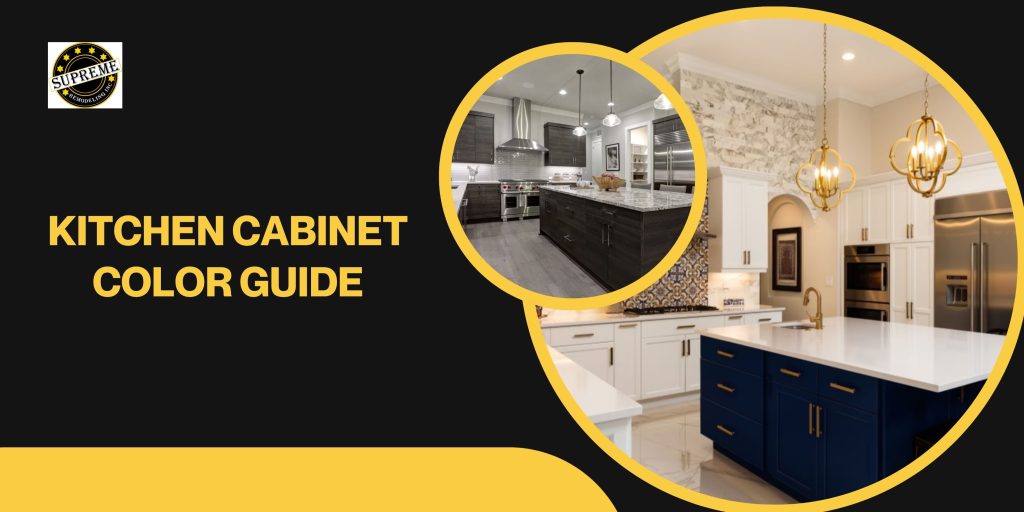
Navy and deep blue cabinets feel confident and rich. They work well in kitchens that get decent natural light and pair beautifully with brass or gold hardware and white countertops.
Green cabinet colors, particularly sage and olive, have surged in popularity because they bring a natural, earthy warmth to the kitchen that feels both current and timeless.
Wood-toned or natural cabinets never go out of style. Whether it is light oak, warm walnut, or a painted wood look, these finishes bring warmth and texture that painted colors sometimes cannot replicate.
Do Not Forget the Hardware and Paint Finish
Once you decide on a kitchen cabinet color, the hardware and the finish of the paint or cabinet material can completely change the final look. Matte finishes feel soft and modern. Satin or semi-gloss finishes are a bit more durable and easier to wipe clean, which matters a lot in a kitchen.
Hardware in brushed gold or brass warms up cool cabinet colors like gray and white. Matte black hardware feels bold and works especially well with darker cabinet colors or natural wood tones. Chrome hardware keeps things looking crisp and clean, especially in modern kitchens.
Think of hardware as the jewelry of your cabinets. A great color with the wrong hardware can feel a little off, while the right hardware can make even a simple cabinet color look elevated and intentional.
Testing Before Committing
Never skip this step. Order sample doors from your cabinet company, or if you are painting existing cabinets, buy sample pots and paint a large swatch directly on one cabinet door. Leave it there for several days and observe it in the morning, at midday, in the evening under artificial light, and on cloudy days versus bright days.
Colors shift more than you expect based on light conditions. This small investment of time before you commit to the full project saves you from a costly change of heart later.
Frequently Asked Questions
What is the most popular kitchen cabinet color right now?
White and off-white remain the most popular choices, followed closely by navy blue, sage green, and warm gray for homeowners who want something with more personality.
Should kitchen cabinets be lighter or darker than the walls?
Lighter cabinets against slightly deeper walls tend to create a grounded, balanced look. However, matching them in tone with subtle contrast also works beautifully depending on your style preference.
How do I choose between painted cabinets and wood-tone cabinets?
Painted cabinets offer more color flexibility and a clean modern look, while wood-tone cabinets bring warmth and texture. Your choice should depend on the overall feel you want for the space.
Can I use a bold color like navy or green in a small kitchen?
Yes, but balance it carefully. Use bold colors on lower cabinets only and keep upper cabinets light, or pair the bold color with good lighting and lighter countertops to keep the space feeling open.
Does cabinet color affect home resale value?
Neutral cabinet colors like white, gray, and soft greens tend to appeal to the broadest range of buyers and can positively influence a buyer’s first impression of the kitchen during a home sale.
Conclusion
Choosing the right kitchen cabinet color is about a lot more than just picking something that looks pretty on a swatch. It is about understanding your space, your lighting, your existing materials, and the feeling you want to create every time you walk into your kitchen. Start with the mood you want, consider your lighting and existing finishes, test samples in real conditions, and do not be afraid to explore options like two-tone combinations or bolder colors if that is what excites you. Your kitchen is one of the most-used spaces in your home, and getting the color right makes every moment in it more enjoyable.