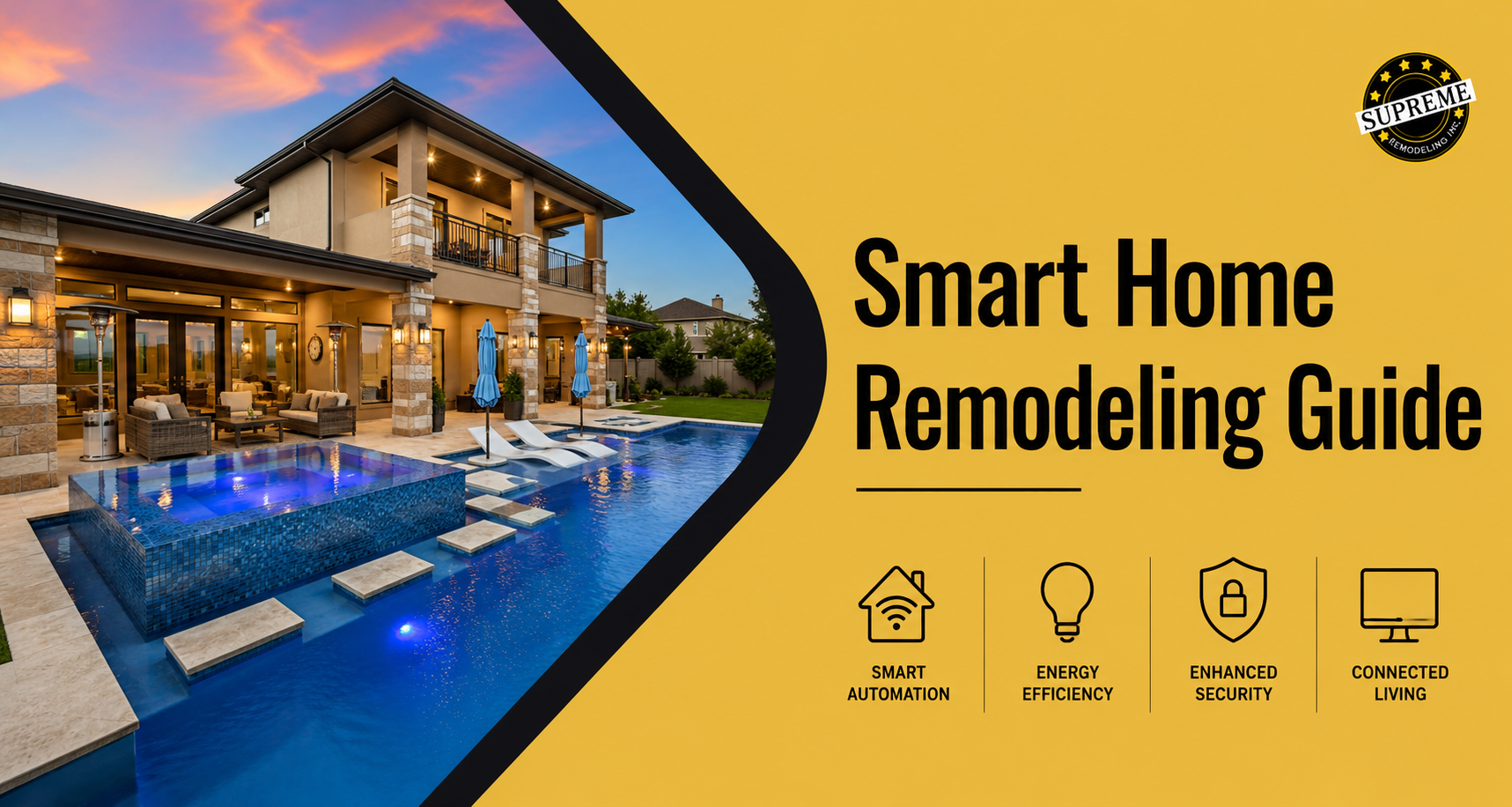
A remodel gives you one clean shot at the parts of a smart home that are hard to change later. Once the drywall goes back up, running new wiring or adding outlets means opening walls all over again. That is why the smart home features you include in your remodel deserve real thought now, not after the paint dries.
This guide covers the features worth building in, the infrastructure to plan before you buy a single gadget, and how to tell the useful upgrades from the ones that only look good in a listing photo. The goal is not a house packed with tech. It is a home that works better every day and does not fight you. Smart home technology has moved past novelty. Plenty of it is genuinely practical. Some of it is not. Knowing the difference before construction starts saves money and a lot of frustration down the line.
Why a Remodel Is the Best Time to Go Smart
Timing is the whole argument. During a remodel the walls are open, the electrical is accessible, and adding wiring costs a fraction of what it does once everything is sealed up. Retrofitting a finished home is where budgets get ugly. Fishing cable through closed walls, patching drywall, repainting the room afterward. All of that adds labor and mess for work that would have taken minutes with the studs exposed.
So the smart move is not deciding which devices to buy today. It is deciding what the house needs to support the devices you might want in five years. Plan the bones now. Add the gadgets whenever you like.
Build the Foundation Before the Gadgets
The most useful smart home upgrade is rarely a device you can see. It is the network and wiring underneath everything. Get this right and the rest is easy. Skip it and even good devices feel slow and unreliable.
A network that can actually handle it
Every smart device leans on your Wi-Fi. A single doorbell is fine. Twenty connected devices streaming, updating, and talking to each other at once is a very different load.
A mesh network with access points spread through the house holds up far better than one router stuck in a corner. During a remodel you can hardwire those access points with Ethernet, which keeps them stable and fast. Map the dead zones before the walls close, because that is the only time fixing them is cheap.
Wiring and data runs
Wireless is convenient, but wired connections are faster and more dependable for anything that matters. Run Ethernet to the spots where you will likely want a TV, a security camera, or a central hub. Cat6 cable is a safe standard that will hold up for years.
You do not have to use every line right away. Pulling extra cable while walls are open costs very little. Adding it later costs a lot.
Power and outlet placement
Not every smart device runs on batteries. Cameras, hubs, sensors, and motorized shades often need power close by. Think about where each of these will live and put outlets there.
It also helps to add outlets inside cabinets, near entry doors, and up at the ceiling for future cameras or speakers. Working with an experienced general contractor during this stage means the electrical plan accounts for tech you have not even bought yet.
Smart Home Features Worth Including in Your Remodel
Here is the practical shortlist. These features earn their place through daily use, not novelty.
Climate control and smart thermostats
A learning thermostat adjusts to your routine and trims wasted heating and cooling. Many homeowners see a real dent in their energy bills, though the exact savings depend on your climate and how leaky the house is.
If your remodel touches the HVAC system, this is the moment to plan zoning so different areas heat and cool on their own. Pair that with smart vents or shades and you get better comfort without much daily fuss.
Smart lighting
Smart lighting is one of the easier wins. Dimmable, schedulable, and controllable by app or voice, it changes how a space feels from morning to night.
The catch is the switch. Smart switches wired into the wall work better over the long run than swapping every bulb, because they control the whole fixture and still work when someone flips the switch off out of habit. A remodel is the right time to install them.
Security: doorbells, cameras, and locks
Security features are consistently the upgrades homeowners and buyers value most. A video doorbell lets you see and speak to whoever is at the door from anywhere. Cameras with motion alerts add real visibility around the property. Smart locks solve the lost-key problem and let you hand out temporary access without cutting a key.
Wiring cameras and doorbells during construction hides the cables and gives them steady power instead of a battery you have to recharge. That clean, concealed install is hard to match after the fact.
Kitchen features
The kitchen is where smart features run from useful to gimmicky. Practical picks include touchless or motion-sensor faucets, under-cabinet lighting on a schedule, and outlets placed for the way you actually cook.
Wi-Fi ovens and smart refrigerators get plenty of attention, but connectivity alone does not add much lasting value, and app support can dry up in a few years. If you are already investing in professional kitchen remodeling services, spend on layout and durable materials first, then let the smart extras be a bonus rather than the headline.
Bathroom features
Bathrooms take well to a handful of targeted upgrades. Anti-fog mirrors with built-in lighting, heated floors on a timer, and a quiet exhaust fan tied to a humidity sensor all pull their weight.
These need wiring, and sometimes plumbing, behind the walls. That makes a bathroom remodeling project the natural time to run them. Adding them later usually means tearing back into finished surfaces you just paid for.
How Do You Decide What’s Actually Worth It?
Start by sorting features into must-haves and nice-to-haves. Must-haves are the things you cannot easily add later, mainly the wiring, the network, and anything hidden behind a wall. Nice-to-haves are the plug-in devices you can buy on any random Tuesday.
The best payback tends to come from thermostats, security, and lighting, because you use them constantly and future buyers notice them. Convenience gadgets like a smart fridge are fun, but they rarely move a home’s value.
Set the budget around the infrastructure and the high-use features first. Careful budgeting for your remodel keeps the tech from crowding out the parts of the project that matter more, like the layout and the finishes you will live with every day.
What Smart Home Mistakes Should You Avoid?
The most common mistake is app overload. Ten devices from ten brands, each with its own app and login, turns “smart” into a daily chore. Choose products that work with one platform or hub so you are not hunting through your phone to dim a light.
The second is chasing devices that go obsolete. When software support ends, an expensive gadget quietly becomes a dumb one. Favor established standards and open systems over closed, one-off products. The third is over-automating. Not everything needs to be smart. A light that just turns on with a switch is not a failure. Automate what saves you real time and leave the rest alone.
A Few More Common Questions
Do smart home features add resale value?
Some do, modestly. Smart home features rarely add large dollar value on their own, but they help a home sell faster and stand out, especially security, thermostats, and lighting. Surveys consistently show that many buyers will pay a small premium for a connected home. Treat them as an edge in a competitive market rather than a guaranteed return on the money.
Can I add smart features later instead?
Yes, and many are built for exactly that. A thermostat, a doorbell, or a smart plug can go in at any point. The reason to plan during a remodel is the hidden stuff, the wiring and network, that gets expensive once the walls are closed. Handle the infrastructure now and add the visible devices at your own pace.
Do these features work if my internet goes down?
It depends on the device. Some smart locks and thermostats keep their basic functions offline, while cameras and voice control usually need a connection to do anything useful. This is one more reason a strong, wired network foundation matters. The more reliable your connection, the less often you will bump into these limits.
Conclusion
The smart home features worth including in your remodel are the ones you use every day and the wiring you cannot easily add later. Plan the network, the power, and the cabling first. Then layer in a thermostat, good lighting, and solid security, and treat the flashier gadgets as extras rather than the point of the project.
Be honest with yourself about what you will actually use. A simpler system you enjoy beats a complicated one you fight. If you are planning a project and want the tech built in the right way from the start, Supreme Remodeling can help guide those decisions when you are planning the project with the right team. Build the foundation well, and your home can keep getting smarter on your own schedule.